
There is no shame in being a Tahir or a Zühre (1),
nor is there any shame in dying for love.
The whole point is being able to be Tahir and Zühre.
In short, the whole point is in the heart.
For example, when fighting at a barricade
For example, when exploring the North Pole
For example, when trying a serum in your veins
Is it a shame to die?
There is no shame in being a Tahir or a Zühre,
and there is also no shame in dying for love.”
– Nazım Hikmet
In the fourth issue of the Trotskyist magazine Son Kavga (Last Fight), I found a series of articles entitled ‘Who is a professional revolutionary, who can be called one?’ In the section of the article entitled ‘Is it foreign to revolutionaries to express love?’, the following is stated: “Revolutionaries, the champions of the working class, evoke images of struggle, war and battle in everyone’s minds. In order to evoke the concept of “love” as a revolutionary, to establish a relationship between the revolutionary and love, one has to think carefully. This relationship, which is impossible to find even for someone on the street, is also difficult to find in revolutionary circles. For the militants of revolutionary groups, juxtaposing the concepts of love and revolution is, at best, seen as a mistake, a weakness, a softness that must be overcome. Revolutionaries cannot identify with love and associate it with the reformist parts of the revolutionary movement. In our society, which exhibits the typical characteristics of Eastern societies, the behavioural pattern of withdrawal in men and women, the discomfort of expressing feelings, and the idea that expressing feelings is an obstacle to strength are the predominant behavioural patterns and habits of thought.
The observation that militant revolutionaries view love as softness, weakness, an obstacle to be overcome, is often mentioned after the 1980 coup. Therefore, the author’s statement that ‘revolutionaries cannot identify with love and associate it with the reformist parts of the revolutionary movement’ is nothing new and is reminiscent of the well-known accusation. What does the author mean by this? Sensual pleasure? Probably not. Is it love? Perhaps… When he talks about female and male thinking habits in Eastern societies. Is it not the case, then, that the qualitative difference between ‘discomfort with the expression of love’ and ‘not associating love with oneself’ has been overlooked?
If I hadn’t read this article after the MKM (Mezopotamya Kültür Merkezi – Mesopotamian Cultural Centre) story competition, I probably wouldn’t think about it so much. The stories in the competition are remarkable in many ways. And very instructive for me. The stories are about the pain, anger, passion for freedom and independence of a people who have risen up. There is resistance and the will to remain steadfast despite everything. Desires for revenge, a spirit of sacrifice, love for one’s homeland and comrades, trust in the guerrillas… All of this is palpable, observable… The hatred is very great, and there is a tendency to glorify death. It seems impossible that brotherhood could develop in the midst of such atrocities. And that is very understandable. But there is something missing in the stories that is inappropriate given the level of consciousness development of the participants. They are loveless stories. Among dozens of stories, there are only four in which love is mentioned. In relationships between men and women, the behaviour ‘I have no evil in me’ prevails.
It is a fact that this issue is a social taboo. But life itself is not so synthetic! The wrong thing to do is to bow to these taboos, to equate love with inner malice. But the point at issue is liberated women and men. The concepts of ‘fighting on the barricades’ and ‘being Tahir and Zühre’ are concepts that complement each other. It is possible to postpone experiences within the heat of conflict. But feelings cannot be postponed. And my criticism refers to the world of feelings and nothing more. What is at stake here is not the attitude of ‘ignoring’ or ‘not associating’. What is at stake here is that the social sensitivity and perhaps the traditions of all past generations, who prefer to say ‘lady guerrilla’ rather than ‘woman guerrilla’, take the dominant place.
The fact that expressing love is not foreign to revolutionaries comes from some of our poets: “In the end / The worst thing became our fate / Death does not weigh six okka (2) on a person / Silence and waiting, terrible / We are young, like the barrel of a gun / And fearless / Longing for peace and celebration / For sleep, deep, carefree, calm / For our thirty-two-toothed laughter / For abundant love and food … How many times have I been close to tears at night / Actually, our mutual longing is beautiful / And actually, we know sadness” (Ahmet Arif)
But if we look at it from the perspective of militant revolutionaries, we should not view love in its narrow and specific meaning. In professional or, as it is called here, ‘full-time’ revolutionary work, willingness is essential. And all relationships based on willingness are conducted with love. As Brecht says, ‘Your sorrow was my sorrow / My sorrow was yours / If you had no joy / I had none myself.’ Militant revolutionaries must be full of such love and joy in sharing. People cannot defend the cause they believe in if they do not love it. Qualities and values that a militant should have: modesty, self-sacrifice, unconditional solidarity, devotion, diligence and patience, spirit of resistance… all these are gained, nourished and developed through love. How can it be that revolution and love do not go hand in hand, when love is one of the cornerstones of socialist morality? It is love for people, love for work, love for life and love for struggle. Kalinin says that ‘love for work is one of the main elements of socialist morality’. The collective is the product of work. It is the most concrete form of struggle and love of revolutionaries. A militant revolutionary is someone who has made being a revolutionary their profession.
There is an unshakeable bond between the militant revolutionary and the collective, built on faith, awareness and trust, cemented by love, and solidified by sacrifices made and an understanding of a new life and a new society. Because the enemy knows this, they first try to destroy this feeling of love and trust that we carry within us and that we increase through sweat and cooperation. At the beginning of their attacks on our revolutionary identities, the trust and love between revolutionary comrades is targeted. They devise familiar scenarios about the moral depravity of leaders, their selfishness, their ruthlessness and much more.
The way to counter these attacks is through strong faith, creative awareness, willpower, a sense of cooperative solidarity and love. Compañero, camarade, tovarisch, heval… In all languages of the world, the word ‘comrade’ has a poetic quality. It describes not only the path we walk together. It is also an expression of the potential for understanding a new life that develops and transforms human relationships on the basis of sharing and creativity. ‘Comradeship’ means sharing pain, multiplying joy, building love, organising life, growing in life.
The communist educator Kalinin says in one of his articles: ‘To be a true party member, it is not enough to be an agitator and propagandist. Something else is needed, namely revolutionary behaviour in political, social and even personal life.’ The revolutionisation of personal life occurs most concretely in the individual relationships of daily life. Being a revolutionary is the most honourable work in the world. But this work should not be viewed merely as a ‘profession.’ Without hearing the pain of the other person, without sharing love, hope, longing, pain and problems, one cannot be a comrade. That is why there is a productive love between revolutionary comrades that changes the lover and the beloved. This love is nourished by trust and fertilised by faith. The strengthening of relationships comes from the further development of the components of love and trust. Cooperation between people who really know and love each other is always more productive. Undesirable developments and deviations are recognised more quickly, and it is easier to work out and implement solutions.
I believe that the concepts of love and revolution are intertwined. It is a love that has both feet firmly on the ground, that is a work of the mind and heart, that grows through sharing. A love that does not grow through struggle, or that does not allow struggle to grow, cannot be lasting. The main element of revolutionary struggle is the human being. And the human being of the future will be built on the basis of the virtue of cooperative sharing and love.
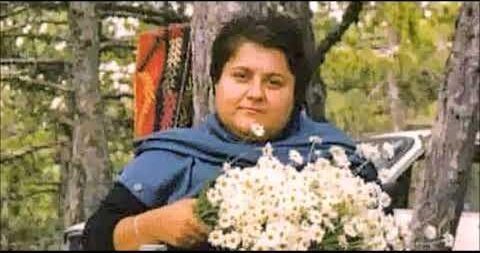
((((((Kutsiye Bozoklar was a socialist intellectual and revolutionary who was involved in political work in Turkey and Northern Kurdistan. As part of the revolutionary struggle against fascism, she was shot and injured during an action and was forced to live in a wheelchair. She continued her political work with ideological texts and books that became a guideline for revolutionaries in Turkey and Kurdistan. In the coming period, we want to gradually translate some of her texts into German and make them available to you.)))))))))
(1): Tahir and Zühre are famous characters in an anonymous love story that is part of Turkish folk culture. In this story, they love each other very much, but Zühre’s father – who is a king – does not allow them to marry. Eventually, Tahir is murdered by the king’s soldiers and Zühre dies of a broken heart.
(2): An okka was a unit of weight used in the Ottoman Empire.