
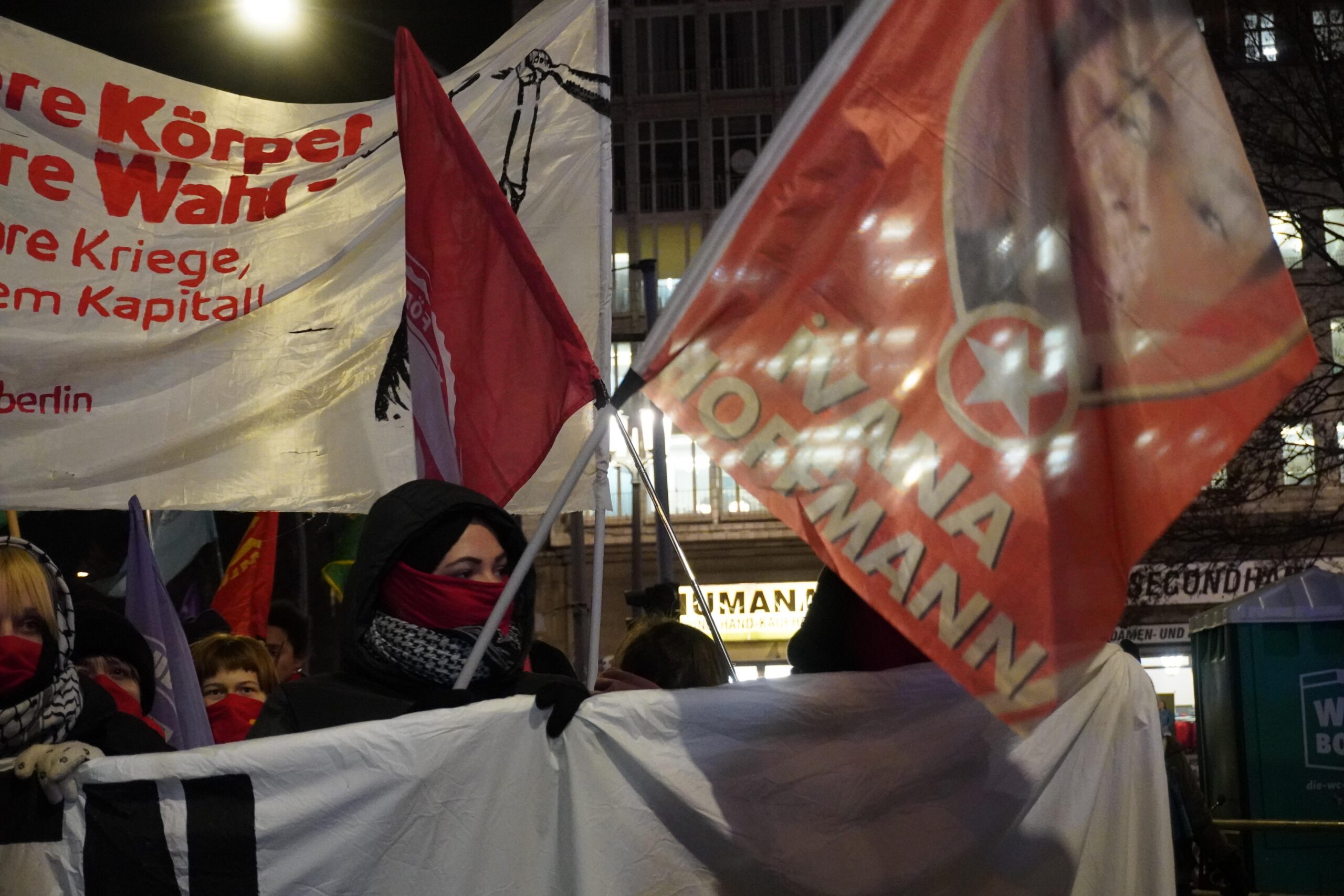
Economic crises, wars, uprisings, school strikes, demonstrations across the globeThe contradictions in the capitalist and patriarchal system are intensifying. As these contradictions grow sharper, living conditions for the broad masses – especially the working class – are getting worse and worse. At the same time, the close link between capitalism and patriarchy becomes even clearer. To ensure profit in times of crisis, capitalism has to exploit the working class even harder and for that to succeed, someone has to shoulder more and more of the reproductive labor at home. Women especially are forced into the role of carrying out this unpaid domestic work. It becomes obvious that the current system, particularly in capitalist crisis periods, depends on an intensified exploitation of women – both in the household and as wage workers who still have to perform their paid labor to meet their daily needs. On top of this heightened double exploitation, the situation for women worldwide worsens dramatically in an unstable system marked by wars and crises: rape as a weapon of war, domestic violence, financial dependence and old-age poverty – only to name a few. Women reach the point where the fight for freedom is inevitable far sooner than the rest of the population. In times of capitalism’s existential crisis, we realize we have nothing left to lose – but everything to fight for!
Our response is crystal clear: we want change. A world where patriarchy does not exist anymore. Change that offers a long-term solution and tackles the root of the problem. We find that in the program of the women’s revolution.
When we look for examples from history and today that point the way forward in the struggle against patriarchy, our gaze turns to Rojava. Since the revolution there, women’s uprisings against their oppression have spread around the globe. In Afghanistan, the reactionary Taliban regime has systematically shut women out of almost every part of society. Yet despite brutal repression, women refuse to be driven from public life. Resistance to the Taliban is driven above all by women fighting for their rights to education, work, and participation in society. But Afghanistan isn’t the only place where women are a leading force against oppression. The uprisings in Iran and Rojhilat especially show the explosive power of this resistance. Day after day, women there defend their right to life and bodily autonomy against the mullah regime. Just one glance at abortion laws makes it clear: even in the so-called “liberal” strongholds of Europe and the United States abortion rights – won through decades of struggle – are never truly secure under capitalism and patriarchy. Reactionary forces – from the US Supreme Court overturning Roe v. Wade to near-total bans in Poland, Germany’s persistent criminalisation of abortion under §218 and ‘conscientious objection’ sabotage in Italy – can strip it away overnight.
Bans and restrictions in dozens of states have once again turned bodily autonomy into a central battleground of resistance, pushing the need for international women’s solidarity ever more urgently to the forefront of our struggle
These developments show that the patriarchal and capitalist system has no intention of fundamentally improving women’s situation. This is why women themselves have taken the struggle for their liberation into their own hands. The women’s revolution in Rojava has created a vital foundation – a real perspective and hope for ending oppression – and made it possible for women to carve out their place in society. For us, too, strengthening and defending this women’s revolution remains a core task. Crushing the remnants of patriarchal oppression in other structures and regions of the world is just as crucial as shielding the revolution from constant attacks. Rojava shows us what life free from gender-based violence and oppression can look like, and how patriarchal structures can actually be dismantled. Jin, Jiyan, Azadî!
For us, the struggle against patriarchy is inseparable from the fight for socialism and for a liberated, self-determined existence. It is a central pillar of our political work. Organizing young women and LGBTI+ people is an essential step, because their oppression takes on countless forms and cuts through every aspect of life. It appears as everyday sexism, humiliation, and violence, as well as unequal opportunities and pay. Our aim is to smash patriarchal relations – a task we see as inextricably tied to class struggle.
That doesn’t mean gender liberation has to wait until after a socialist revolution. Patriarchal thinking, behavior patterns, and structures are deeply embedded in society, and we live inside that society. So we start right now, building consciousness for our collective liberation. Challenging our own patriarchal habits is an ongoing struggle we carry out both individually and with comrades. That’s why this broad ideological battle against patriarchy must be waged collectively, within our own ranks. Only when we put measures in place – like affirmative action for women and LGBTI+ in responsibilities and tasks, when we do consistent work on gender consciousness, and when we prioritize women becoming active subjects in political work – will our practice become a powerful weapon in the struggle for a gender liberated world.It’s also clear: the fight against male supremacy demands organized resistance to inequality and violence against women and LGBTI+. Liberation isn’t an individual matter – we either win it together or not at all. Through organization, we want to empower and develop young fighters and pioneers in every area of political work. We reject the gender roles forced on us, and we’re convinced that strong organization among women and LGBTI+ people is absolutely essential for the revolution to succeed.
Today’s bourgeois culture is rotten through and through. It lines up with the ideology of the ruling class and keeps reproducing the existing relations of production. How do we spot it? In the way media reduces women to shallow, one-dimensional stereotypes. In how women’s roles in relationships are portrayed in movies, books, and TV shows – how girls are taught from childhood that their lives boil down to finding a man, marrying him, and having kids. We’re supposed to believe, feel, and think exactly what the system wants so the rulers’ interests stay protected. We know that as long as this system exists, none of us can fully escape its influence. Still, we’re fighting today to transform ourselves and our comrades. Through the program of the women’s revolution and through criticism and self-criticism of our own behavior and methods, we confront each other with existing patriarchal ideas, and bourgeois values every single day – and set a revolutionary culture against them.
Before, during, and after the socialist revolution, the struggle against patriarchal patterns of thought and action remains a continuous process. It applies to communist men as well, and is waged together with them in the broader fight against capitalism. As part of the working class, men stand opposed to capital – yet as men they must also reckon with their position inside patriarchal structures. Because capitalism and male dominance are so tightly interwoven, working-class men have an objective interest in women’s liberation. This shows clearly that isolated struggles lead nowhere. Fighting for women’s rights or LGBTI+ liberation without challenging capitalism is just as futile as pushing for socialism while sidelining the liberation of women and LGBTI+ people. Only a united struggle against both systems of oppression can bring genuine freedom. In Young Struggle, male comrades have the duty not only to support women’s liberation but to step up actively in the fight against patriarchy. Of course, women and LGBTI+ people will be on the front lines – but we expect male comrades to play an equally vital and committed role.
As socialists, we don’t just aim for a fundamental transformation of economic and political conditions – we also strive for the emergence of a new human being. In our associations and collective work, we build a sense of togetherness and raise our consciousness to higher levels through things like regular reading circles, gender consciousness sessions, and education. In a world where capitalism divides us and isolates us more and more, we want to create collective, comradely relationships based on mutual respect and the common good, free from competition, egoism, or ruthlessness. We want to strengthen one another, because with revolutionary optimism and determined will, we will fight for a society of solidarity – free from capitalism and patriarchy.
Women that fight, are women that live!